
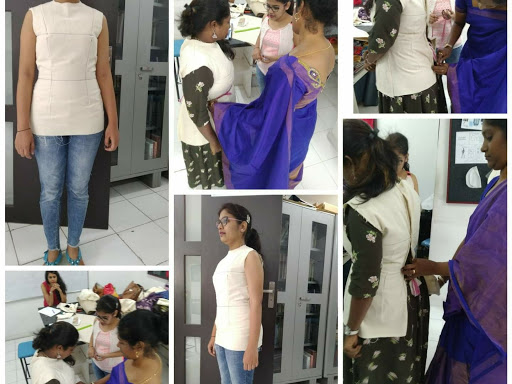
Choose a fashion course by the work you will learn to do, the feedback available, and the commitment you can actually keep. A course title or a photograph of a fashion show cannot answer those questions on its own.
Start with a short list. Comparing three realistic options carefully is more useful than collecting brochures from every institute in Bengaluru.
Define the work you want to learn
“Fashion design” can cover different activities. You might want to construct Indian womenswear, develop Western garments, work on styling briefs, study textile design or pursue a formal degree. Each direction needs a different comparison.
Write one sentence about the work you want to practise. Then list your current skills without embellishment. For example: “I can use a domestic machine, but I have not drafted a pattern.” This gives a counsellor something concrete to assess.
If the goal is still broad, ask to see examples from different programmes rather than choosing only from the course names.
Read the curriculum as a sequence
A list of subjects can look comprehensive while telling you little about learning. Ask how one skill leads to the next.
For garment construction, look for the relationship between measurements, pattern development, cutting, assembly, fitting and finishing. For styling, investigate the brief, research, selection, fitting and presentation process. For business topics, ask whether you practise costing and order records or only hear a lecture about entrepreneurship.
The VFA course comparison gives an initial view of its two annual diplomas. Use the individual course pages to prepare more specific questions.
Ask who checks the work
Feedback is one reason to pay for supervised learning. Find out who teaches the modules and how individual work is corrected. Ask what happens if a student is struggling with a pattern or cannot complete a technique in class.
A guest workshop or visiting expert can be valuable, but it does not tell you who supports the regular programme. Keep those roles separate.
Read a mentor's documented background and ask how it relates to the course. Vidya Vivek's profile provides the starting point for that discussion at VFA.
Inspect process, not only presentation
A useful student example shows the brief, pattern or toile, a correction and the finished garment. It helps you see the learning that took place.
Check who made each piece. A faculty masterwork should be labelled as such. An alumnus's later commercial work is different from a classroom project. Neither should be passed off as typical beginner output.
When viewing the VFA work gallery, note which pieces you want to ask about during a visit. Ask what starting skills and practice time were involved.
Compare the actual commitment
| Area | What you need to know |
|---|---|
| Class time | Days, start/end times and expected attendance |
| Independent work | Practice and assignments beyond class |
| Equipment | What is available and what you must supply |
| Cost | Tuition, material, travel, assessment and other charges |
| Credential | Exact title, awarding body and intended use |
| Support | Missed-class process, feedback and administrative contact |
Treat each provider's answer separately. One institute's eligibility, affiliation or scholarship does not establish another's.
Test the commute at the time you would travel for class. Bengaluru neighbourhood names are not a reliable substitute for your actual journey. A course that looks convenient on a map may still be difficult to attend regularly.
Ask about money before committing
Request a written fee and inclusions sheet. Confirm whether materials, tools, shoots, assessments, taxes or registration are included. Ask about payment stages and the applicable refund or withdrawal terms before making a payment.
A lower headline fee may exclude things you need. A higher fee is not proof of better teaching. Compare the complete offer and the value of the learning you can verify.
Avoid choosing on an income promise. The course can teach skills; future employment or business results depend on more than attendance.
Use the campus visit well
Take a short question list and allow the team to explain the ordinary teaching day. Ask to see the relevant equipment and a suitable learning space. If there is an active class, respect the students' work and privacy.
At VFA, the annual diplomas require in-person attendance in Jayanagar. Do not assume a weekend or online substitute exists because another provider offers one. Confirm any workshop as a separate programme.
After the visit, record what was answered and what remains uncertain. A clear unanswered question is a reason to follow up, not a reason to fill the gap with a hopeful assumption.
To include VFA in your shortlist, request a campus visit and use the academy listing on Google Maps for the location. Bring your learning goal, weekly availability and cost questions together.